
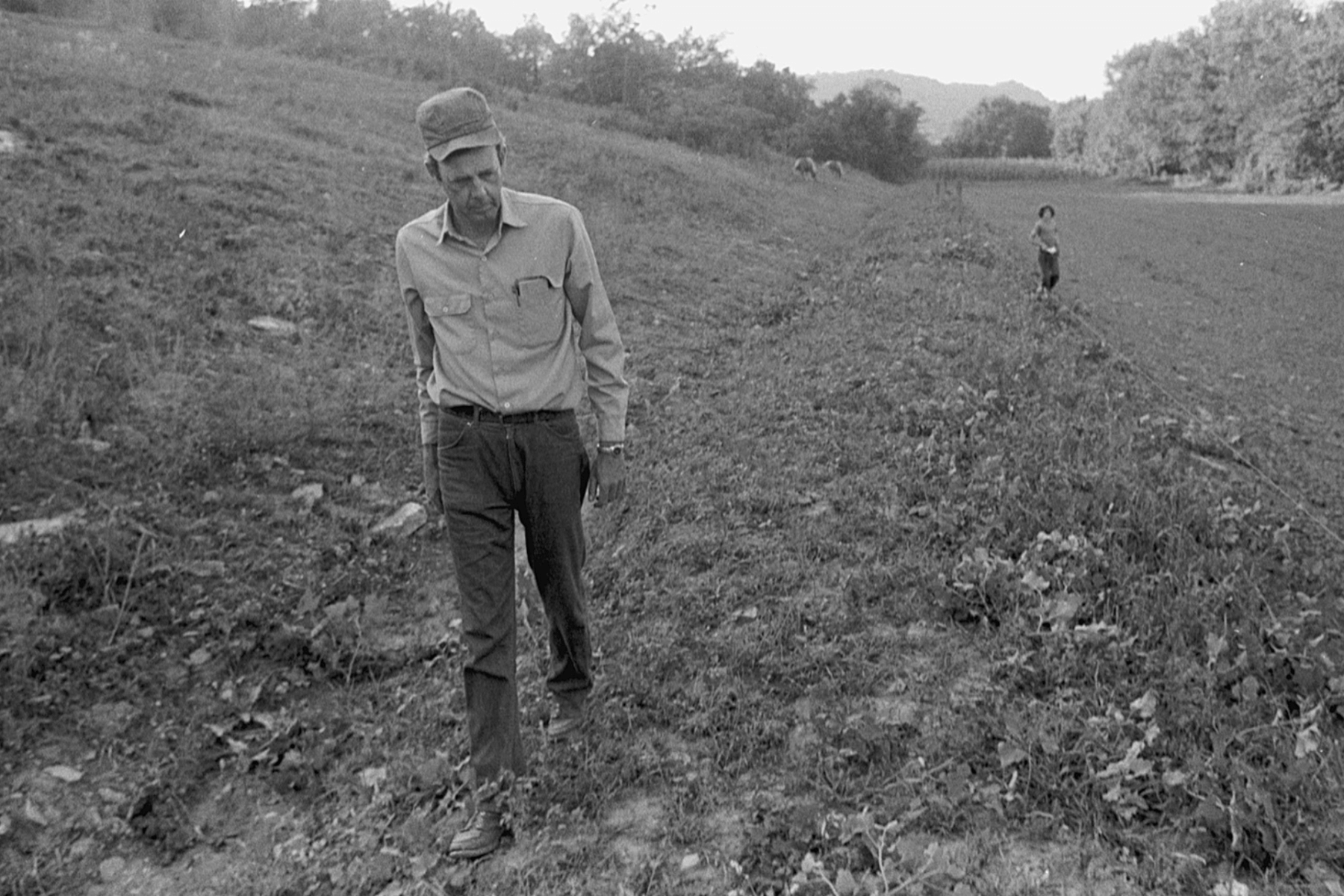
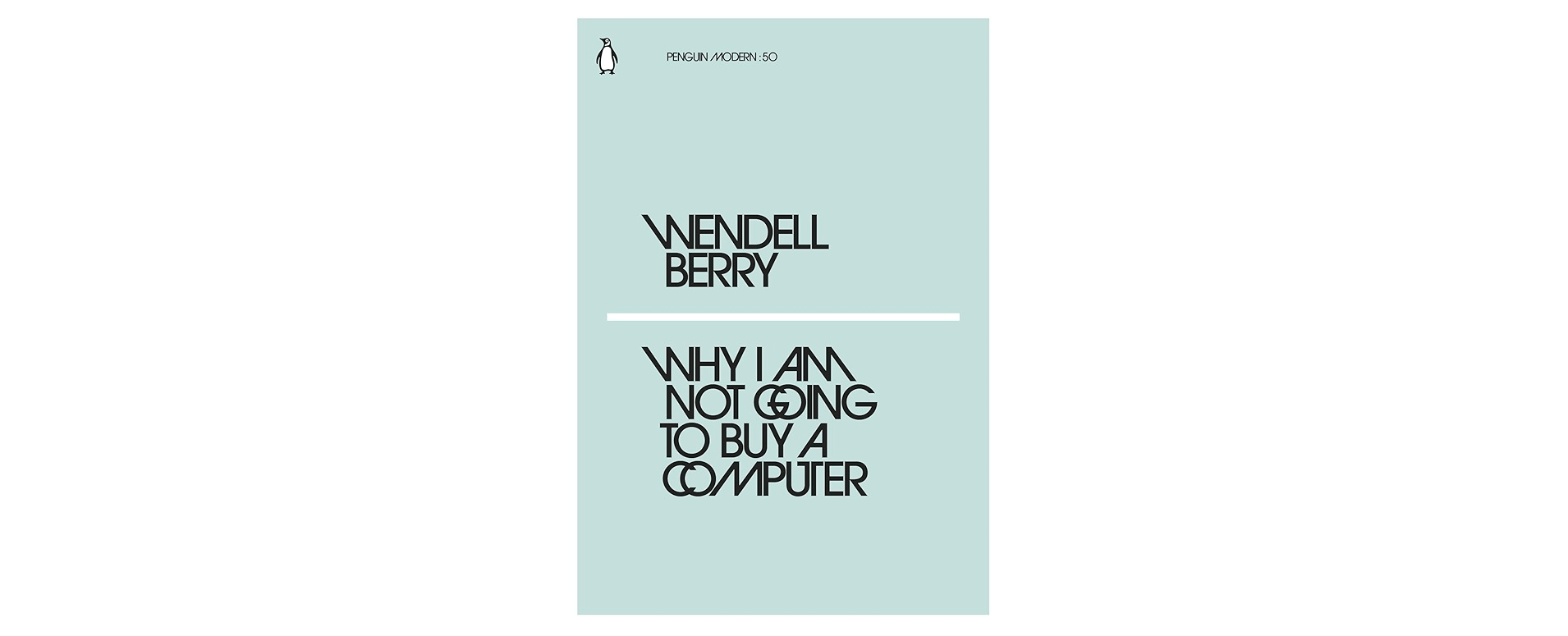
When Wendell Berry published “Why I Am Not Going to Buy a Computer” in 1987, he expected pushback on the usual grounds: technological regression, inefficiency, stubbornness. What he didn’t expect was the accusation that would stick harder than any other. He was, his critics said, exploiting his wife. She typed his manuscripts on a Royal standard typewriter — handwritten notes in, finished and edited copy out. He called it a cottage industry that worked well and pleasantly and his critics dug in.
Berry’s response was sharp. They were, he said, audacious and irresponsible gossips. They did not hesitate to stereotype and insult, on the basis of one fact, a woman they did not know. They obviously thought themselves feminists of the most correct and principled sort, and yet they had not imagined a single kinder possibility: that his wife might do this work because she wanted to and liked to, that she might find use and meaning in it.
These critics had never met his wife. They knew nothing about her relationship to the work, or to what the Berrys were building together. And yet they felt entirely confident diagnosing exploitation. How had they arrived at such certainty? By stripping the work down to its visible component — typing — and assuming the rest must be invisible coercion. Ironically, they had done exactly what Berry said computers do. They had abstracted the work from its context. Removed it from the human relationship. Converted it into a metric, a transaction, a problem to be solved.
Berry refused the computer because he could see what abstraction does to work. What he couldn’t see — what he didn’t have to see in 1987 — was that the next generation of machines wouldn’t just ask for his manuscript. They might be asking for his job.
Now a new set of billionaires are making that pitch openly. They’re not asking you to buy a computer. They’re asking you to imagine a future where you don’t have to work at all. Elon Musk and others keep saying it: AI will remove work from humanity. There won’t be jobs anymore. It’s framed as liberation. No more drudgery. No more nine to five. Humanity freed to pursue meaning and leisure and self-actualization.
It’s insane. But it’s not new.
Because what these men are really saying is that work is a problem. That doing things — making things, building things, wrestling with difficulty, creating — is suffering to be eliminated. That the point of human life is to not work. To consume. To float. To be serviced by invisible machinery. But that’s not how human beings are made. We are created to create. To make. The work is not separate from the meaning — it is the meaning.
So what happens when you remove the work? The research is merciless. Over ninety percent of studies linking joblessness to mental health find anxiety, mood disorders, suicidal behavior. But the number that matters more is what people actually lose: not just income, but identity. Structure. Time. Purpose. Relationships. Self-esteem. Sense of control.
When a factory closes in a town, it doesn’t just put people out of work. It erases a way of life. And the people left behind don’t punch out for the last time and arrive into leisure. They don’t suddenly discover their authentic selves through rest and contemplation. They experience what Viktor Frankl called the existential vacuum — a profound sense of meaninglessness. An emptiness of time that becomes an inner emptiness.
You can see it now. It’s dressed up as lifestyle. Endless festival weekends, life as a permanent party on display, the aesthetics of purposelessness treated as freedom. But that’s not freedom. That’s what happens when you’ve been told work is pointless and you’ve believed it. You’re left with nothing to build, nothing to make, nothing to choose. No way to say: I did this. No realization that making matters because it is a choice that we get to participate in.
We got here slowly. A generation grew up with microwaves and drive throughs. Everything handed to them. The internet came along and accelerated it. Now Gen Z and the generation after — they’ve been trained since birth that ease is the goal, that difficulty is something to escape, that the point of technology is to remove friction from every moment of existence. Neil Postman warned about this in 1985. He said we wouldn’t be controlled through oppression. We’d be controlled through distraction. Through the promise that if we just consume the right things, outsource the right tasks, optimize the right systems, we’ll finally be free. We won’t need to struggle. We won’t need to fight for anything. We can just exist.
But here’s the truth about difficulty. It’s not a bug in this human life, it is the feature that makes us human.
Csikszentmihalyi studied what he called “flow” — that state where you’re so absorbed in something that hours disappear and you feel most alive. He found that flow requires one specific thing: a challenge that matches your skill level. Not too easy. Not impossible. Right at the edge of what you can do. That’s where aliveness lives. That’s where you discover what you’re made of. Remove the challenge, and you remove the possibility of flow. You remove your aliveness.
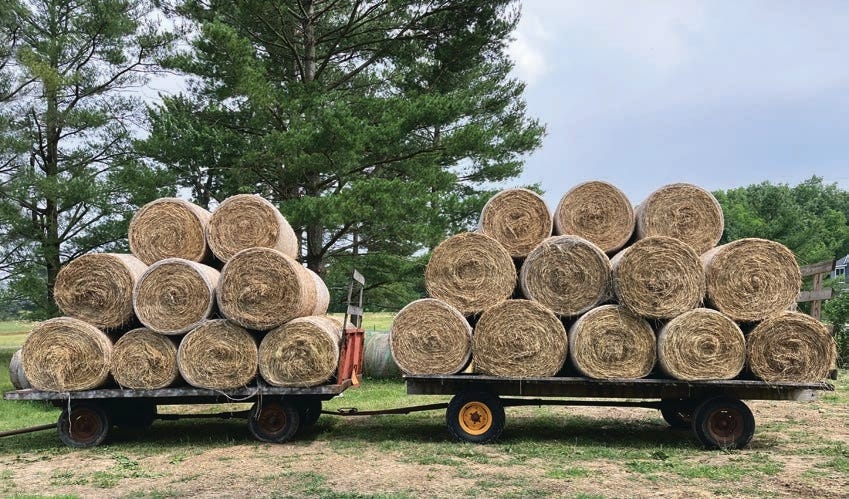
I grew up in rural Alabama. My dad gave me a work ethic before I knew what to call it. I worked in pastures. I helped train horses. I hauled hay into the back of flatbed trucks with the summer sun cooking my skin. I remember the specific feeling of finishing something hard and knowing I had done it. Later, in high school, my basketball coach ran us until we wanted to die. They weren’t called suicides for no reason. Laps and laps and laps around the gym. A giant hill across the street that we called the Church Hill that I genuinely believed might seal my fate. I didn’t want to do it. I never wanted to do it. Every part of me wanted to stop. To throw in the towel. But when I finished — something happened. Not relief. Something bigger than relief. I felt alive. Not because suffering is good. But because difficulty, resisted and overcome, reveals something about you that comfort never can. You find out who you are on the Church Hill. You don’t find out who you are letting an algorithm feed you.
I just finished my first book. Six years total. And I’ll tell you something that might surprise you — my writing assignments were the easiest part of it. Were they difficult? Yeah. But before a single word could matter, there were artist waivers to negotiate, editors to arrange, licensing agreements to untangle, photographers to hire, thousands of assets to manage, contract lawyers to deal with, and more dead ends than I can count. It nearly broke me more than once. It was an almost never ending, nonstop wall of difficulty. It’s in print now, shipping this week to the presale crowd, and the feeling sitting with that fact — that it’s done, that it exists, that it went from nothing to a real physical object through years of grinding difficulty — is something I could not have manufactured any other way. No shortcut gets you there. The reward is inseparable from the cost.
And my marriage. Twenty-three years. Everything that has changed me — the best parts of who I am, the parts I’m actually proud of — I would never have prompted them. If you’d handed me a text box at twenty-two and said describe your ideal future, I would not have written the hard parts. I would not have asked for the challenges. But the challenges are what made me. The marriage that shaped me is the one that pushed back, that required something from me, that made me prove myself over and over to someone who mattered.
You can’t prompt your way to that. You can’t outsource it. You can’t ask an algorithm to hand you a meaningful life and expect to recognize it when it arrives.
“The illiterate of the 21st century will not be those who cannot read and write, but those who cannot learn, unlearn, and relearn.”
You’ve probably seen that quote. It travels everywhere — LinkedIn posts, commencement speeches, motivational slideshows. It’s been attributed to Alvin Toffler for decades, shared millions of times as a clean and authorless idea. Except Toffler didn’t say it. He was quoting a psychologist named Herbert Gerjuoy, whose actual words were rougher and more honest: “Tomorrow’s illiterate will not be the man who can’t read; he will be the man who has not learned how to learn.”
Nobody checked. The idea just traveled — stripped of its origin, divorced from the human who actually said it.
Clean. Frictionless. Authorless.
Which is exactly what we’re talking about.
The billionaires aren’t wrong that AI can handle tasks. I use it myself — for some of the administrative work that doesn’t feed my soul, so I can write and photograph and build the things that only I can build. That’s not exploitation. That’s the tool serving the work, not replacing it. There’s a version of this that’s healthy. Berry’s wife did the typing so he could do the writing. She wasn’t doing his writing. The distinction matters enormously.
But there’s a line. And the line is whether the tool frees you to do your best work or whether it convinces you that having work is the problem. Whether it helps you climb the hill or talks you into believing the hill shouldn’t exist.
Berry knew this. That’s why he didn’t buy the computer. Not because computers are evil. Not because technology is wrong. But because the moment you outsource your work, you’ve made a choice about what you believe work is. You’ve decided it’s a problem instead of a purpose.
His critics made the same choice. They looked at his wife typing and saw exploitation because they’d already decided typing was drudgery. They couldn’t imagine she might want to do it. That the work itself — the attention, the care, the knowing what he was trying to say better than he knew it — might be the whole point.
That’s the real argument the AI billionaires are having with us. They’re not saying “we’ll make your life easier.” They’re saying “we’ll make your life pointless in a comfortable way.”
You can’t prompt your way to a life that means something.
You have to build it.
If you enjoyed this, consider grabbing a copy of my new book Made On Earth For Rising Stars: The Story Of Electro-Harmonix. Every pre-sale matters. It tells my publisher and distributer that people like you care about books like this. Also, my content here is always free, but if you subscribe with any payment, 100% goes to my local non-profit art center where we teach kids music and art for free. www.arthousegrandview.com
My dad graduated from college with a computer science degree around the time I was born. It wasn’t his first choice. He wanted to be a history professor, but he didn’t think it could pay the bills so he became an IT professional.
My dad retired 2 years ago and I don’t know if he ever derived meaning from his job. His job seemed soul sucking and pointless. His meaning came from everything he did outside of his job.
We get most of our meaning from hard work, but I don’t think most of the hard work gives us meaning. A lot of the work can feel pointless. I feel like my dad‘s story is common. Doing something hard doesn’t guarantee purpose.
Maybe the real argument AI billionaires are making isn’t “we’ll make your life pointless in a comfortable way.” Maybe it’s “your life was already pointless, but we can make it more comfortable.”
Maybe that can create an environment where, if someone wants to become a history professor, they don’t have to make the calculation my dad did, and take work that feels pointless just for a paycheck.
Or maybe not. We’ll find out soon enough.
This was a superb article. One of the best I’ve read on Substack.