ARTIFICIAL INTELLIGENCE AND THE FUTURE OF GUITAR
Does A Product Reveal More About Us Than It Does About Technology?

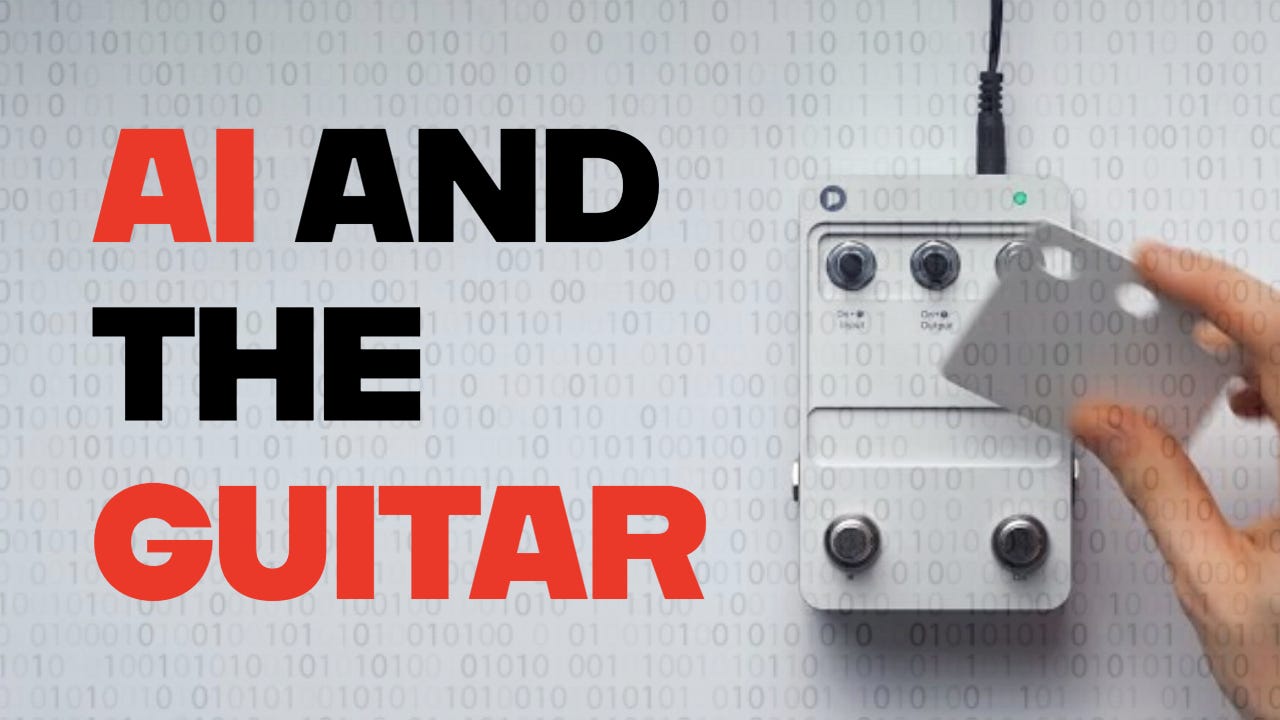
I haven’t played the Polyend Endless. Neither have you. As I write this, nobody outside of Polyend has other than a few likely product testers and influencers making content for the launch. The pedal ships next month, if the timeline holds. So this isn’t a review. This is something else — an attempt to understand what it means that this product exists, and what assumptions had to be true for someone to build it.
The Endless is a guitar effects pedal that generates effects from text descriptions. You type what you want — “a dreamy, lo-fi reverb with a bit of grit” — and the software writes the code and loads it onto the hardware. If it’s not quite right, you describe the tweaks and try again. The company calls this “Playground,” a clever pun on playing the guitar and the childhood nostalgia of monkey bars and swing sets. They notably avoid the word “AI” in their marketing materials, though that’s clearly what it is. They know the word is radioactive in creative communities.

Much can be said of Polyend who makes fantastic products. The ones I have in my collection are impressive, well thought out, and intuitive despite living in the digital genre of effects that usually leave me frozen and overwhelmed by screens and sub-menus. It is well known that I prefer the simpler things in life, but as a product designer myself, I carry a deep respect for the domain of complicated and feature-heavy. This new device sparks my curiosity as a thinker, but my natural skepticism as a player who relies on simple.
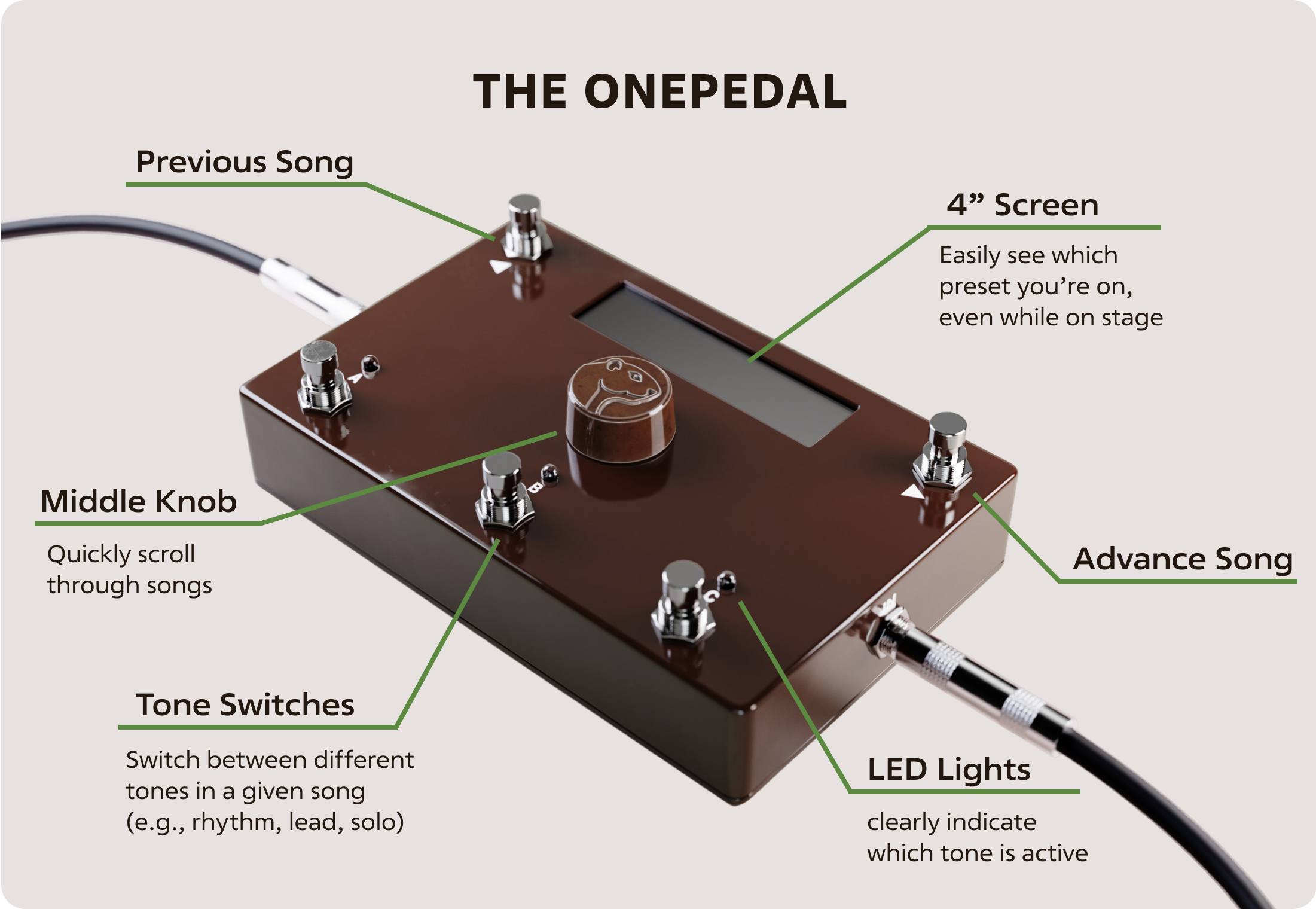
There’s also the Groundhog Audio OnePedal, still making its way through Kickstarter and development. Its promise is even more direct: feed it any song from your music library, and it will match the guitar tone. “Sound like your favorite song with a single click.” Stop dialing in knobs, and start playing. I’ve had a few email correspondences with the developer over the last year, and the intention is pure: technology is exciting and what if we made a new type of guitar pedal that the world has never seen. Having requested a demo unit last year to no avail — much like the Endless — I’ve never got my hands on one. A guitar effects specialist with no firsthand experience.
These are the first of what will certainly be many. The Polyend Endless will not be the final form of this technology. First is not best — it never is. The first attempts at anything reveal what the inventors think we want. They may be right. They may be catastrophically wrong. But before we decide, we should notice what’s being assumed.
The assumption is this: guitarists want efficiency. They want to skip the experience of searching and discovering.
I’m not sure they do.
The Archaic Instrument
Here’s the thing about the guitar that doesn’t get said enough: it’s interestingly archaic.
It has to be learned. It has to be held in your hands and fought with. It is an analog experience in the deepest sense — metal strings against metal frets, wood resonating, fingers forming shapes that took months or years to become automatic. Playing guitar requires hundreds of things to line up at once, perfectly. The right amount of pressure. The right position. The right timing. The coordination of two hands doing completely different jobs. The physical memory that only comes from repetition. The hardening of the fingers — pain that proves you did the work.
This is guitar.
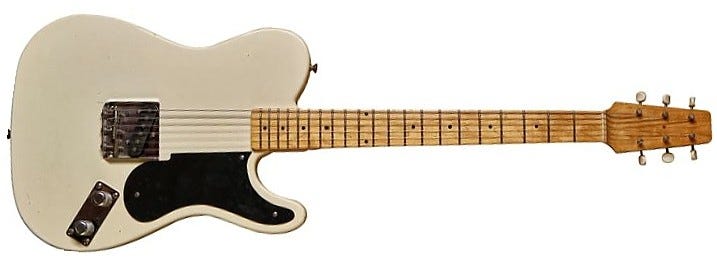
The electric guitar itself was a radical technology once. In its inaugural year, 1932, the instrument wasn’t an immediate disruptor. It faced various marketing and evolutionary battles, like spectators fearing players would be electrocuted, to legendary luthiers like Gibson mocking its existence as a far inferior instrument. It also survived a decades-long evolutionary process toward louder, less feedback-prone performance. It was an underdog from day one, and it fought to stay alive, but in the 1950s it found its place front and center on the new stage of rock & roll — it never looked back.
It changed the world and then — for the most part — it stopped evolving.
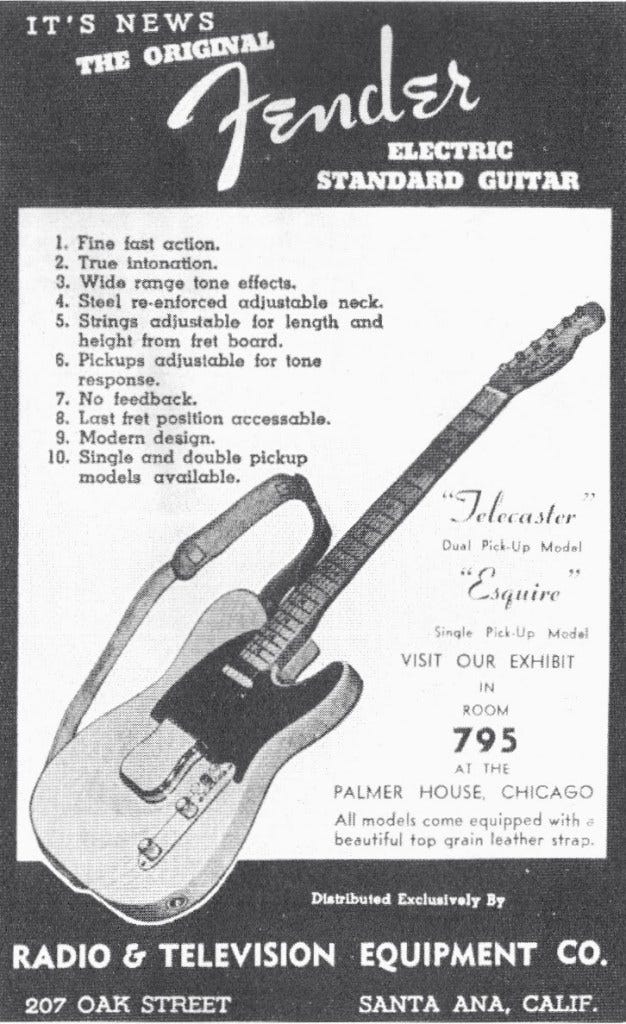
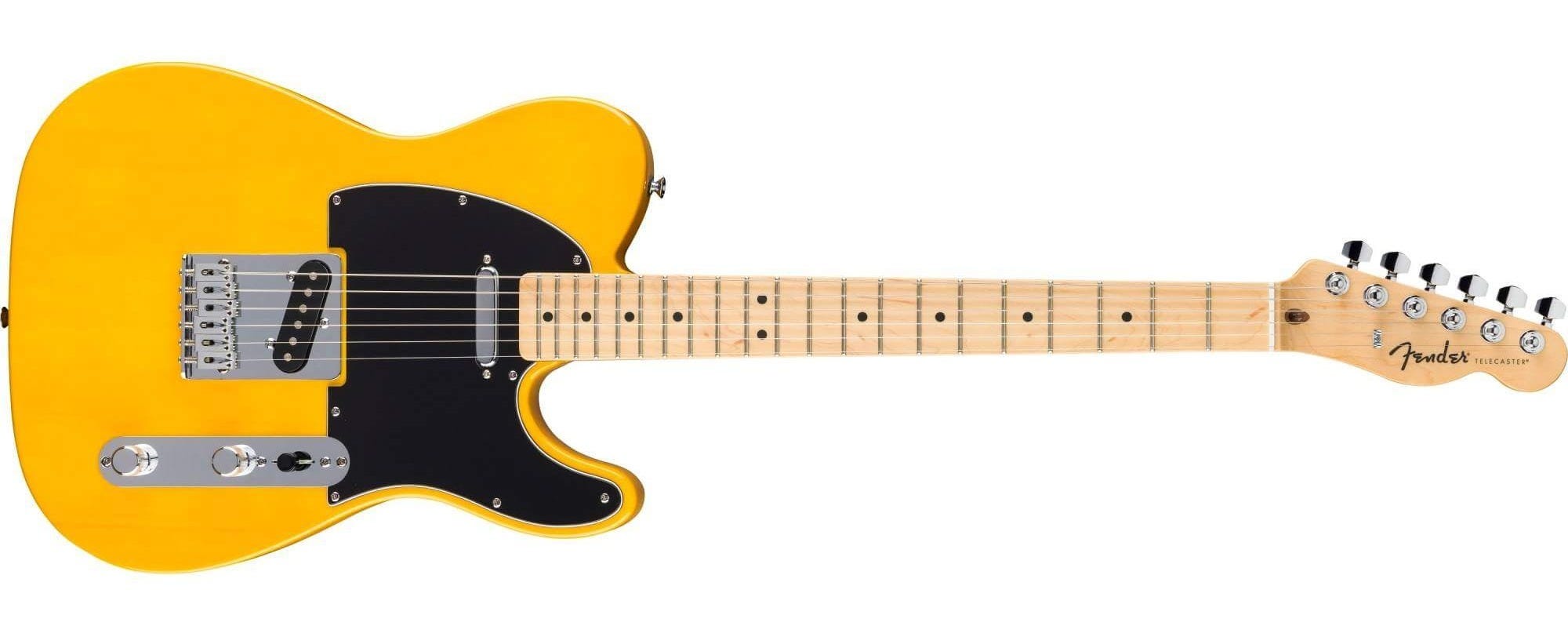
The groundbreaking Fender Telecaster is approaching 75 years old. The Les Paul and Stratocaster are not far behind. We’ve been playing essentially the same instruments — same shapes, same pickups, same wood, same magnets sensing string vibration — for nearly three-quarters of a century. Yes, electronic technology evolved, giving us new amplifiers, effects, and a few useful gadgets here and there, but for the most part the electric guitar won the twentieth century and then said: We’re done. This is it. It has refused modern convention in a way that is simply astonishing.
Millions of players across three generations looked at every attempt to “improve” the instrument — active electronics, MIDI integration, robot tuners, self-tuning systems, graphite necks, headless designs, digital modeling built into the body — and said, no thank you, we’ll keep the old thing.
The guitar didn’t reject technology because guitarists are stupid. The guitar rejected technology because technology usually obsesses over trying to solve the wrong problems.
The Jurassic Park Question
There’s a line from the original Jurassic Park where Ian Malcolm, the chaos theorist played by Jeff Goldblum, is watching the scientists celebrate their achievement in bringing dinosaurs back to life. And he says:
“Your scientists were so preoccupied with whether they could, they didn’t stop to think if they should.”

This isn’t a stab at innovation. It’s a question about assumptions. The Jurassic Park scientists assumed that because dinosaurs were impressive, people would want them. They didn’t stop to ask whether “impressive” was the right metric, or whether there might be values — safety, wisdom, humility — that should have outranked capability.
The AI pedal developers have made a similar assumption. Because finding a tone is slow, guitarists must want it to be fast. Because describing what you want is easier than dialing it in, description must be better than discovery.
But what if the search is the point?
What We Actually Keep
We have abundant evidence that humans don’t always want the most efficient solution.
The quartz watch nearly killed Swiss mechanical watchmaking in the 1970s and 80s. Quartz was cheaper, more accurate, and required almost no maintenance. By every functional metric, the mechanical watch had lost. The industry cratered. Brands folded. Craftsmen lost their livelihoods.
And then mechanical watches came back — not because they suddenly became better at telling time (they didn’t; they’re still objectively worse), but because the industry learned to articulate what mechanical watches actually offered. Researchers who studied this phenomenon found that watchmakers began emphasizing craftsmanship, the handmade process, the human element that mass production couldn’t replicate. The watch became an identity marker, a statement about what the wearer valued.
The same pattern appears elsewhere. Vinyl records were supposed to die. They didn’t — they grew. Manual transmission cars offer worse fuel economy than automatics and are harder to drive. Enthusiasts say they’ll build their own if manufacturers stop making them. Fountain pens cost hundreds of dollars, require maintenance, and write no better than a fifty-cent ballpoint. People treasure them anyway.
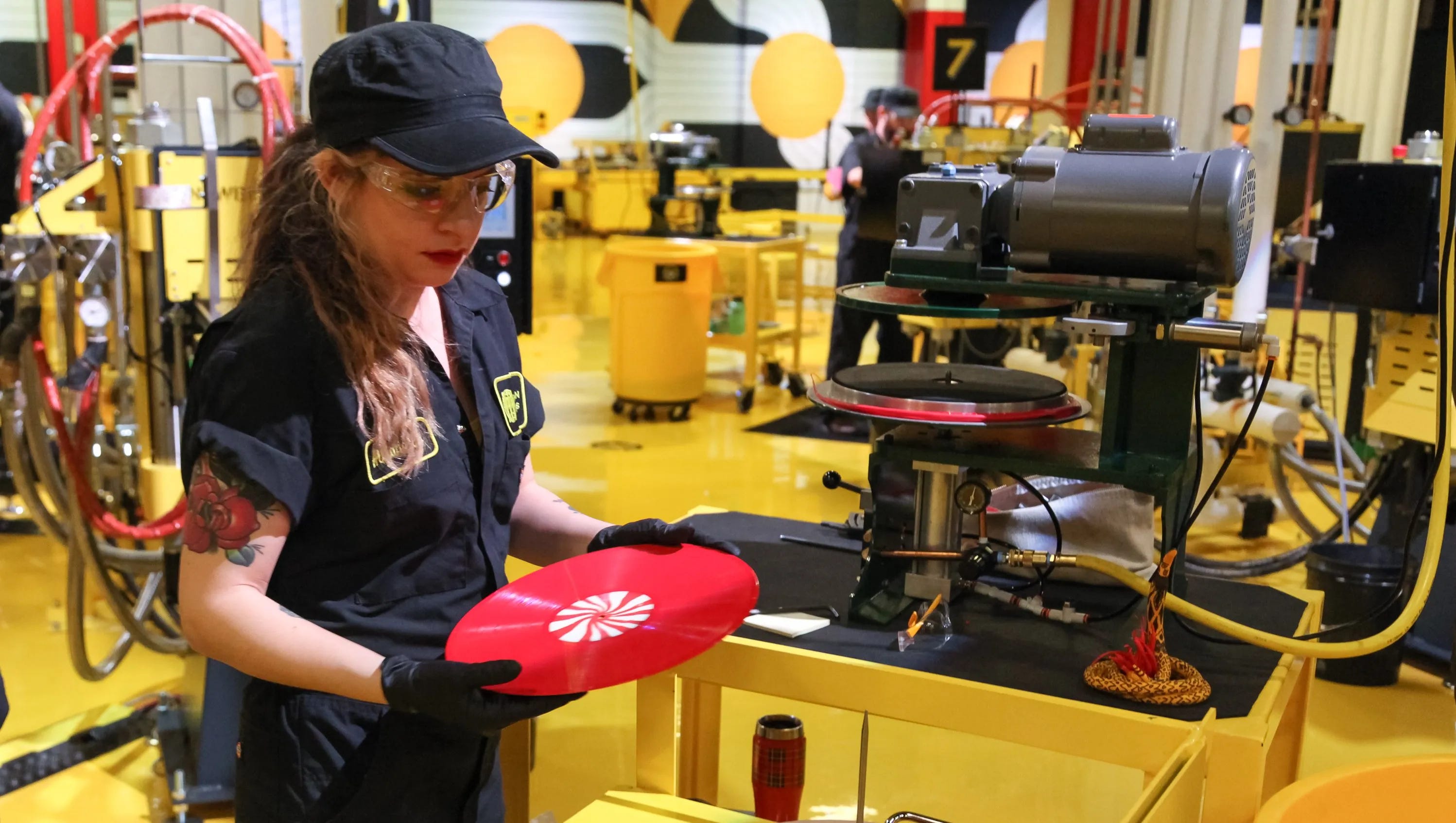
The researchers have a term for this: “technology reemergence.” It describes cases where demand for a legacy technology doesn’t die away but persists in a generative form that permits sizeable market expansion. The old thing comes back, not despite being obsolete, but because of what its obsolescence represents.
What these technologies share is that the process is inseparable from the product. You don’t buy a mechanical watch just to know what time it is. You buy it because of what it means to wear something that ticks, that was assembled by hands, that connects you to four hundred years of horological tradition. The inefficiency is the feature.
The Wrong Problem
If you’re already playing guitar — you’ve chosen an archaic, demanding, analog instrument — you’ve already voted with your hands about what kind of experience you want.
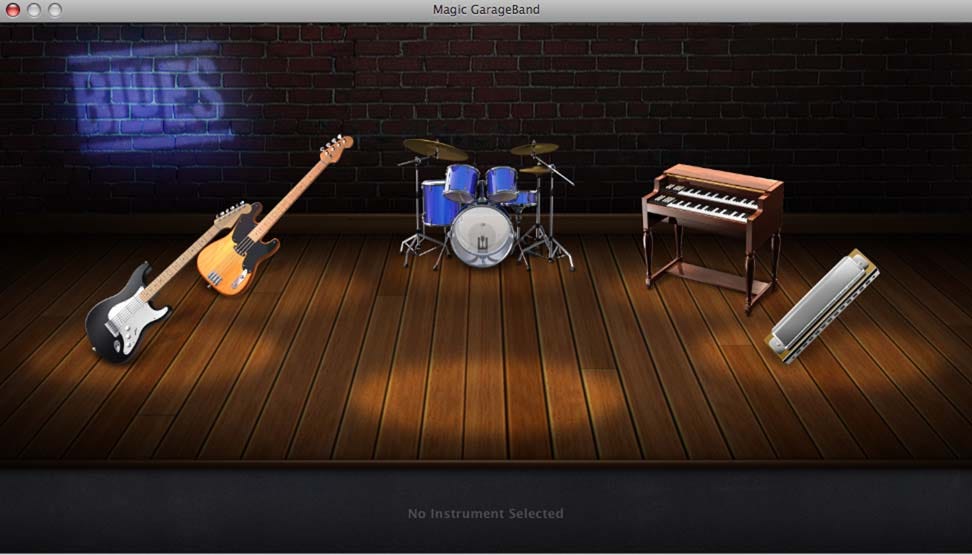
You didn’t pick up the guitar because it was the fastest path to music. You could have opened GarageBand. You could have programmed beats on your iPhone with a 99-cent app. You could have done a hundred other things that would have gotten you to “making music” faster than the agonizing discipline of learning where to put your fingers on a fretboard.
But you didn’t. You chose the instrument that requires you to build calluses. The instrument that sounds terrible for months before it sounds tolerable. The instrument that demands you sit with your frustration and keep going anyway.
And now a company arrives and says: “We’ve solved the problem of searching for your tone.”
But was searching for your tone ever the problem? What if searching for your tone is the point?
What if creative process is more important than created product?
The hours spent turning knobs, stacking pedals, swapping pickups, adjusting amp settings — that’s not overhead. That’s not waste. That’s the practice. That’s how you develop ears. That’s how you learn what you actually like versus what you thought you’d like. That’s how you stumble onto sounds you never would have thought to describe.
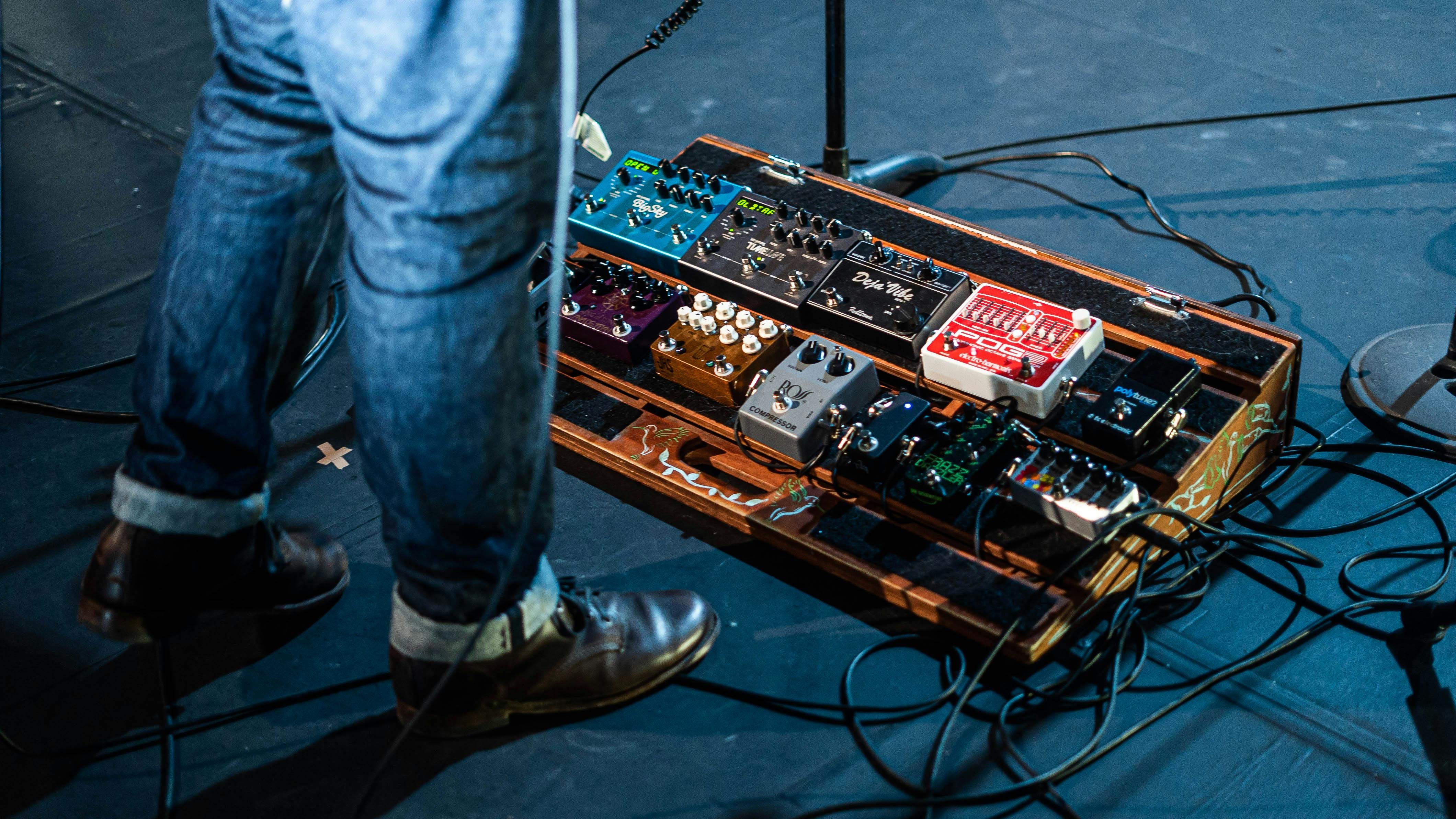
In my two decades of JHS Pedals, one thing is consistent. People email every day, asking what settings do I use to sound like Hendrix, Cobain, Slash, Morello, or Gilmour. But that’s not how it works. You can’t set the knobs to Hendrix. You can’t slap on a preset and be Led Zeppelin. Every player is unique — our amplifier, our guitar, our strings, our picks, our effects, our hands, our ears, and our tastes. Every player who has ever found themselves in the guitar did so by trying to find their heroes first, unknowingly stumbling into themselves along the way.
I believe the process of learning, searching, and fighting with the guitar is its greatest gift to humanity. If I had been handed everything I wanted from the guitar immediately, I wouldn’t be here now. Teenage Josh would have never felt the reward of discovery and accomplishment, and the instrument would have lost all of its value. JHS would have never existed if not for the search, the curiosity, and the discovery.
I am convinced that through the friction of its simplicity, we fall in love with this stubborn and countercultural instrument.
First Is Not Best
I’m not demonizing these products. I’m not saying the people who built them are villains (I know for a fact that they are not), or that the technology is inherently evil, or that anyone who buys one has betrayed the instrument.
What I’m saying is that first attempts reveal assumptions. And the assumptions embedded in these products are worth examining.
The Polyend Endless assumes that if you can describe an effect, you should be able to have it instantly. But description and discovery are different processes. When I turn a knob and hear what happens, I’m not executing a plan — I’m learning what’s possible. I’m building a vocabulary I didn’t have before. I am exposing myself to chance that will lead me to what I do not know I need. The limitation is a generative experience.
The Groundhog OnePedal assumes that matching a famous tone is the goal. But the tones we remember weren’t arrived at by matching something else. They were arrived at by searching — often by accident. Edge got his delay sound because he was trying to solve a problem. Clapton found his tone by rebelling against the boundaries of conventional wisdom. Eddie Van Halen’s brown sound came from modified equipment and happy accidents. These weren’t destinations that could have been described in advance. They were discoveries off the planned path.
Will these products work? Probably, to some degree. Will they improve? Absolutely. Will some people find them useful? Certainly. Will they be the future of guitar effects?
I doubt it.
Not because the technology will fail, but because the technology is solving for the wrong variable. It’s optimizing for speed in a domain where speed was never the constraint. It’s removing friction from a practice that derives its meaning from friction.
I am aware that I may eat those words, as many who have tried to predict the future of innovation have done before, but I feel confident in this: the guitar and its users want to remain simple. They beg to stay archaic.
The Polyend Endless will not be the final form of this technology. Something will come after it — refined, improved, closer to whatever this eventually becomes. First is not best. But first does lead us forward, and the direction it points matters.
Right now, it’s pointing toward a future where you describe what you want and receive it. A future where the search is eliminated.
I don’t think that’s where guitarists want to go.
If it is, I believe that spells the end of the instrument’s creative success and its survival in a world that can already supply better versions of instant gratification.
The Ultimate Luddite
In closing, I want to consider this: maybe the electric guitar is the ultimate Luddite.
Not Luddite in the lazy sense — the person who fears technology, who can’t adapt, who’s left behind by progress. Luddite in the original sense: the craftsman who recognized that some innovations don’t serve the people using them. The worker who understood that efficiency for its own sake can destroy the thing that made the work meaningful.
The guitar has rejected thousands of so-called “improvements” for over seventy years. It knows something we keep forgetting: that the struggle is not an obstacle to the experience. The struggle is the experience.
We still play guitars with hundred-year-old technology in them. We barely even bother changing the shapes. This isn’t failure to evolve. This is a verdict, rendered slowly, across generations, by millions of people who picked up the instrument and discovered what it actually offers.
What it offers is not efficiency. What it offers is the search.
And the search is the point.
Go play your guitar.

This is the third in an unplanned trilogy. The first, “John Mayer and the Coming Simulacra,” asked what happens when we can no longer tell the copy from the original. The second, “Do We Really Care About the Water?”, asked whether our objections to new technology are honest or tribal. This one asks whether eliminating the search serves the people who chose the searching in the first place. The thread running through all three: technology is inevitable — how will you respond?
If you enjoyed this Substack, consider being a paid subscriber. All of my content is 100% free, but all subscriptions help fund my local community art center and provide completely free music and art classes to my underserved community. Learn more at www.arthousegrandview.com
It’s like barbecue. I cook it on wood and charcoal, not with gas or electricity or hoppers and pellets, because I love the process. It’s an experience every time. In trying to replicate someone else’s recipe, I found something that I liked even more.
Same thing happened when I was playing around with my pedalboard and my amplifier. I was trying to nail someone else’s sound but found my own.
Mass produced or easy bake barbecue takes away the journey. AI guitar tone takes away the journey. And now we’re giving the robots some more ownership of our creativity when we should be training them to mop the floors and wash the dishes so we have more time to chase our guitar tone.
The Endless fascinates me.
“Give me a reverse delay with vibrato and tremolo on alternate repeats.”
“Now add a plate reverb to the tremolo repeats.”
A playground indeed.